Tea, a Gurkha, and an Unlikely Group
The Sandakphu trek began, as many of the best things do, over tea with a stranger.
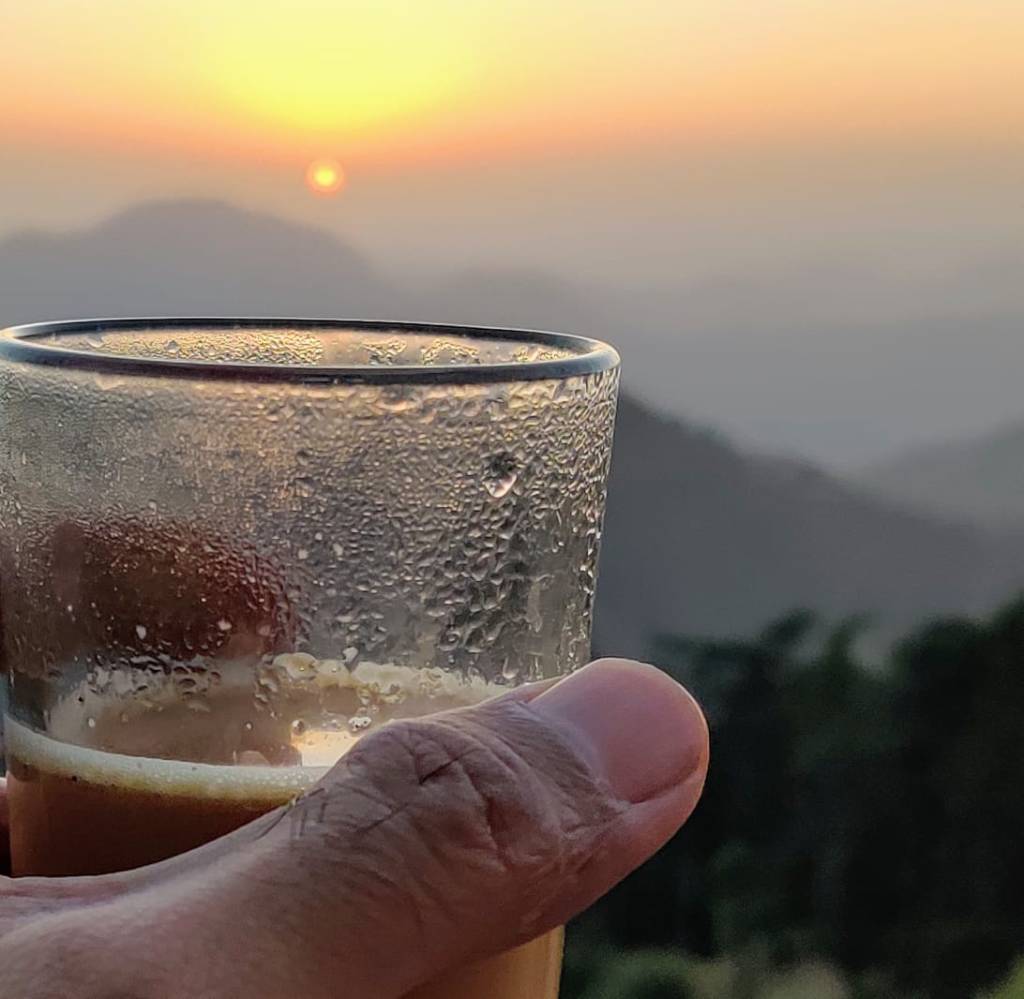
I had arrived in Mirik — a small hill town in the Darjeeling district and checked into a Gurkha family’s bed and breakfast. Over tea — Darjeeling, obviously, grown on the slopes visible from the window —with the owner, a retired serviceman, I mentioned the Gurkha Soldier Welfare Trust work I had consulted on some years back, and that was that. We talked for two hours. He sent me off to bed with extra blankets and a bottle of homemade pickle.
In the morning I met the group I would be trekking with: a handful of Bengalis from Kolkata, varying in age and fitness but uniform in enthusiasm and the quantity of food they had packed. We drove together from Mirik to Manebhanjan — the small market town at the foot of the Sandakphu trail, which marks the last point at which the road can be described as straightforwardly navigable — and there we met Jigme. Our guide. Tibetan, compact, unhurried, with the faintly amused expression of a man who has watched many city-dwellers confront a steep hill for the first time and knows exactly what is about to happen.
Jigme said very little at the start. He didn’t need to. He simply began walking, at a pace that appeared gentle and turned out to be relentless, and we followed.
Monks, a Football, and Accidental Acclimatisation
The proper trek begins not at Manebhanjan but a little further up at Chitrai — a village that doubles as home to a regional Buddhist monastery. As we arrived with our packs and our intentions, we found the open ground beside the monastery occupied by a congregation of young Tibetan school children and novice monks in full robes, engaged in a football match of conspicuous seriousness.
I joined the game – I think they felt it might be amusing to see a grown man topple and slip during the game. The monks, robes flying, moved with an ease and speed that bore no relationship to their clothing. I was wearing trekking boots, not designed for quick lateral movement and was able to keep them amused with my slips and topples. The children showed no mercy, which is as it should be.
It was twenty minutes of complete, laughing, lung-opening exertion at altitude — and when Jigme indicated it was time to collect the pack and begin, I felt more prepared for the mountain than any amount of warm-up stretching could have achieved. My lungs had opened. My legs remembered what they were for.
The Land Rovers of Manebhanjan
Before the walking begins in earnest, Manebhanjan offers a spectacle that deserves a mention. The steep track from the town to Sandakphu is one of the toughest motorable routes in India — gradients reaching thirty to forty percent in places, on a surface that uses the word ‘road’ in a spirit of generous interpretation. The only vehicles that service this route (and allowed to run on these roads) are not modern SUVs but ‘The” Land Rovers. Specifically, elderly Land Rovers that were imported during the British era and have been kept in continuous operation through what can only be described as a heroic local engineering tradition.
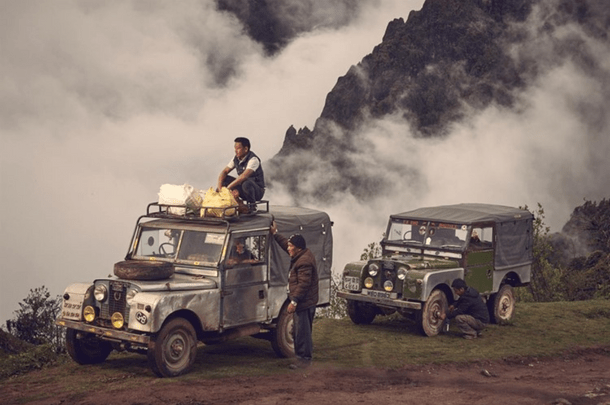
The drivers will tell you, with pride, that each vehicle contains components from five or six retired predecessors — a mechanical Jugaad that has been climbing this hill since before most of its current passengers were born.
As trekkers, we encountered them few times on the sections where the trail and the road share the same narrow strip of mountain. The Land Rover passengers — warm, seated, ascending at speed — would peer out at us with an expression of comfortable superiority that I found both completely understandable and deeply irritating. We were sweating uphill. They were watching us from upholstered seats. There is an argument to be made that paying for a seat in a eighty-year-old Land Rover with no suspension on a forty-percent gradient is its own form of suffering, May be!
Walking Between Two Countries
One of the more disorienting pleasures of the Sandakphu trail is that for much of it you are not entirely sure which country you are in. The ridge that the path follows is the border between India and Nepal, and in several places the trail itself is the boundary line. The villages of Tumling and Kalipokhri are arranged with the casual indifference to national borders that characterises communities which existed long before anyone drew the lines. Houses, lodges, and tea shops stand simultaneously in both countries. Local people cross back and forth as you might cross a village street.
The standard joke among trekkers — and Jigme delivered it with the timing of a man who has said it many times but still finds it amusing — is that you may have breakfast in India, stop for tea in Nepal, and return to India for dinner, all without showing a passport once. It makes you reflect on the particular absurdity of lines drawn on maps when viewed from a ridge that the mountains themselves have always treated as a single continuous thing.
What the joke does not mention — and what I discovered only upon returning home — is that your phone is considerably less philosophical about borders than the landscape. I had forgotten to switch off mobile data roaming. As the trail wandered between India and Nepal, my phone was dutifully connecting to whichever cell tower happened to be closest at any given moment, racking up a series of international roaming charges that my network provider had itemised with extraordinary thoroughness.
The trail passes through the Singalila forest — rhododendrons in full colour in the right season, pheasants moving through the undergrowth, and the persistent rumour of red pandas in the bamboo above the path. I did not see a red panda on the trail. Jigme said this was not unusual — local guides describe a red panda sighting as a sign that the mountain has accepted you. I made a mental note to visit the small zoo at Darjeeling on the way back, which I did, and which gave me at least a sense of what I had failed to see in the wild. A red panda is nothing like the large black-and-white beast most people picture when they hear the word panda. It is rust-red, roughly the size of a house cat, and moves through the branches with a liquid confidence.
The Champagne of Teas
No journey through this landscape deserves to pass without acknowledging what is growing on its lower slopes. The tea gardens around Darjeeling exist because of a piece of nineteenth-century botanical larceny that the British Empire conducted with considerable nerve. Chinese tea cultivation had been a closely guarded national secret for centuries. In the 1840s, a Scottish botanist named Robert Fortune was dispatched by the East India Company — in disguise, posing as a Chinese merchant — to steal tea plants, seeds, and crucially the knowledge of how to process them, from the tea-producing regions of China.
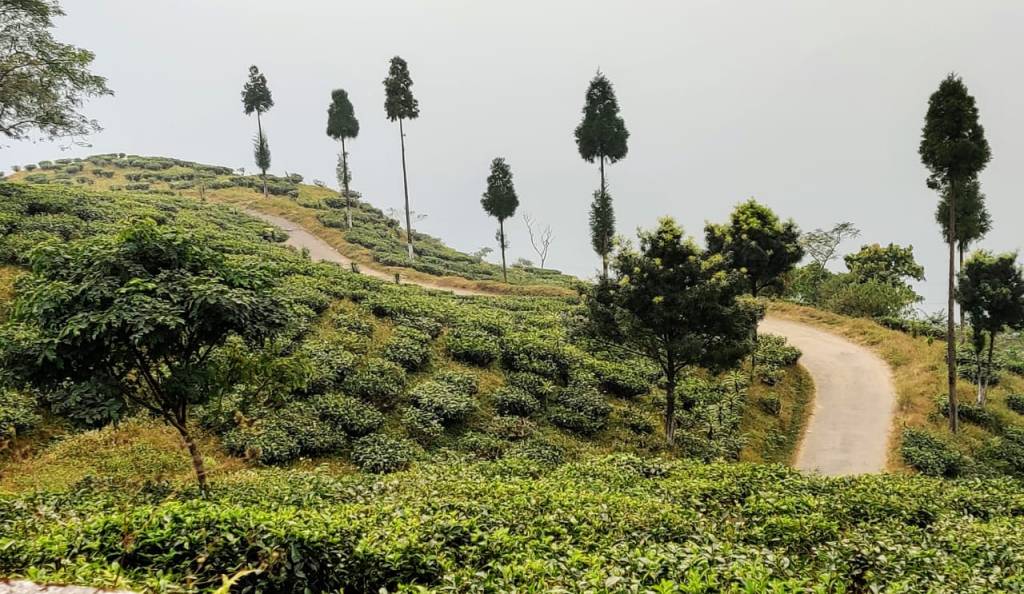
Fortune succeeded. The plants were brought to the cool, misty Himalayan foothills of Darjeeling, and what grew there turned out to be something that China had never quite produced — lighter, more floral, with a quality that earned it the description the champagne of teas. The same mist that rolls in from Nepal and obscures the mountains in the afternoons is precisely what gives Darjeeling tea its character. The landscape and the cup in your hand are, it turns out, the same thing.
I drank a great deal of it at each stop — warm, efficiently run, teahouses with a range of hot drinks and proper food and bedding with a roof — were one of the more civilised aspects of this trek. Sandakphu is not an easy trek, steep, long – treacherous at times but it is a comfortable one.
The Sleeping Buddha
On the evening of the third day, we reached Sandakphu. The summit viewpoint at 3,636 metres is the highest point in West Bengal. The view from the ridge in clear weather — and we had clear weather, which Jigme accepted with the quiet satisfaction of someone who had arranged it — is one of the most extraordinary in the Himalayan world.
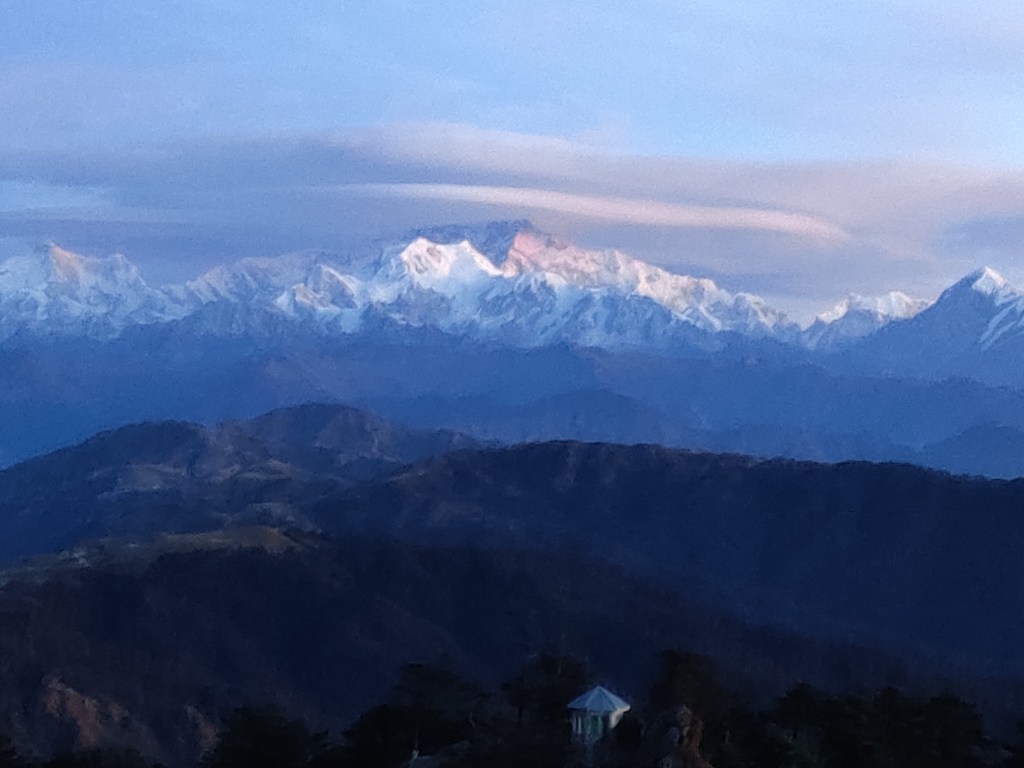
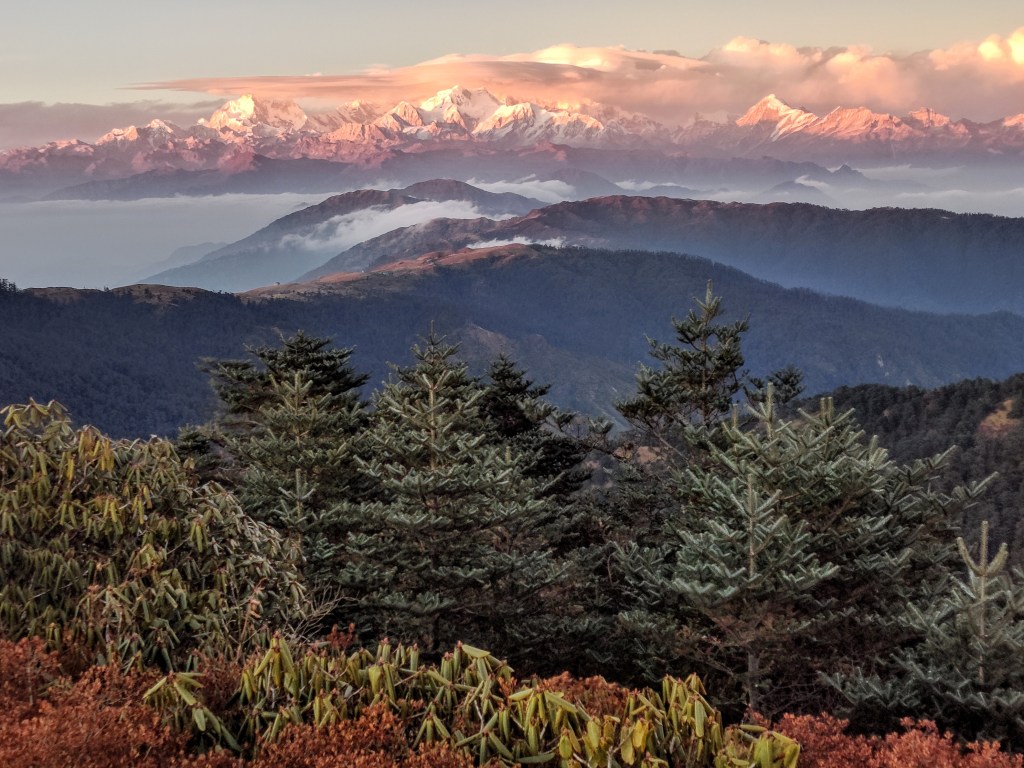
Four of the world’s fourteen peaks above 8,000 metres are visible from this single point — four of the seven that lie within Nepal’s borders. Everest — distant, unmistakable, the pyramid — sits to the northwest. Beside it, Lhotse and Makalu. And to the east, filling its own enormous section of sky, Kangchenjunga — the third highest mountain on Earth, the highest peak in India, the one that Sikkim regards as a guardian deity and has never permitted to be fully summited on its sacred block. You can stand here with a cup of tea — Darjeeling, obviously — and look at four of the planet’s fourteen eight-thousanders in a single sweep. The phrase balcony of the Himalaya is not an overstatement.
But the view that people come here for specifically, is not any single peak. It is the entire Kangchenjunga massif seen from the west at the right angle and in the right light.
At sunset, Jigme pointed along the ridge. He said: look at the whole skyline, not any one peak. And then — once you adjust from looking at mountains to looking across them — it appears. A reclining figure of enormous serenity, stretched across the horizon. Kabru forms the face — the high forehead, the long slope of a nose, the composed features of a figure in deep repose. Kangchenjunga itself is the great belly and torso of the figure, rising and falling with the easy breath of something utterly at rest. And at the far end of the massif, Siniolchu and the lower peaks trail away as the folded legs. Locals call it the Sleeping Buddha. Some traditions call it the Sleeping Shiva. The name matters less than the seeing.
It takes a moment. And then it is simply there, and you cannot imagine how you missed it, and you cannot unsee it once found. I watched it at sunset as the gold moved across the peaks — Kabru’s forehead catching the light first, then the long descent of the nose into shadow, then Kangchenjunga’s vast belly illuminated from the side, the whole figure lying in that late warmth before the cold comes in from Nepal and the sky deepens to violet behind the ridge.
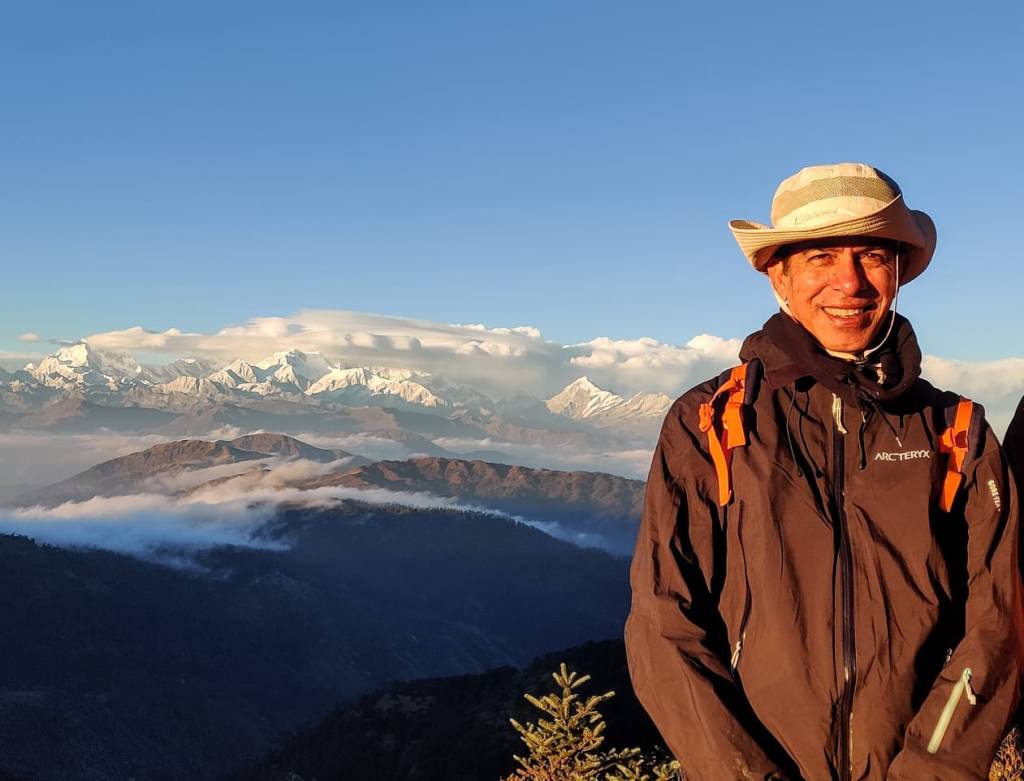
In the morning we were up before dawn. The Sleeping Buddha at sunrise is a different experience. The light arrives from behind you, from the east, and strikes the massif from the front rather than the side. The face emerges from darkness with more precision, each feature sharpening as the light strengthens. Kabru’s forehead catches it first — a pale gleam before any warmth enters the sky. Then the nose, the closed eyes, and finally Kangchenjunga’s enormous torso catching the first orange rays in a blaze that, for about four minutes, makes the whole massif look as though it is exhaling warmth rather than simply receiving it.
We sat with our tea and watched in silence, which is not typical for a group of Bengalis who have been excellent company throughout and have strong opinions about most things. But there are views that impose their own quiet, and this is one of them.
What Jigme Said
On the last morning, as we prepared to descend, I asked Jigme what he made of the trekkers he guided year after year — the city people arriving with new boots and ambitious itineraries and a tendency to underestimate the hill. He thought about it for a moment in the way that people think when they are deciding how honest to be.
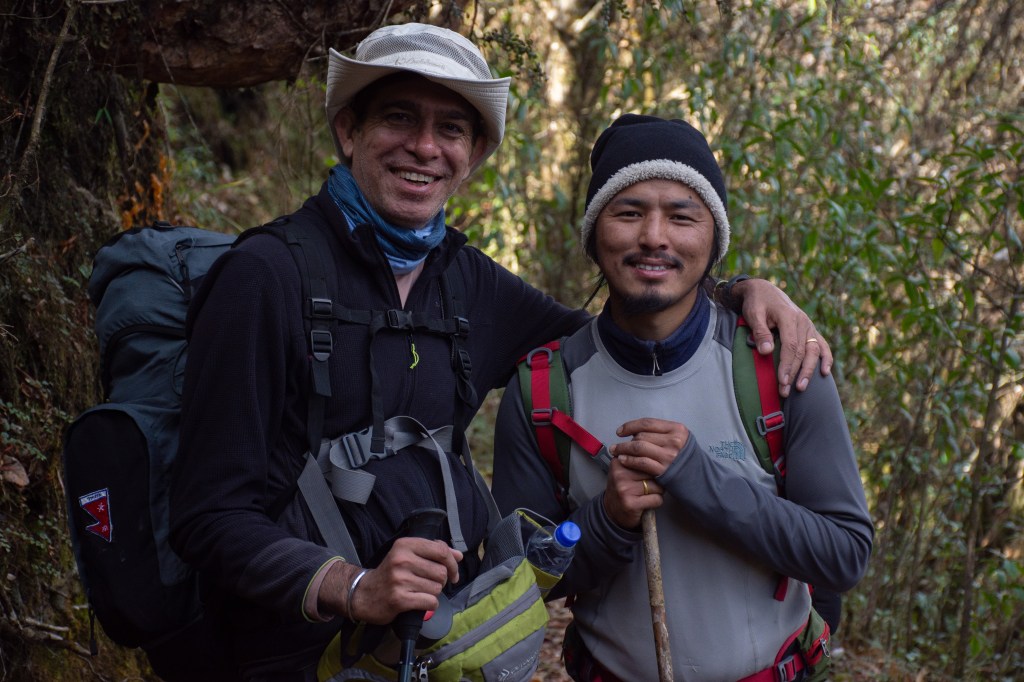
He said: everyone comes looking for the mountains. The mountains give them something they weren’t looking for. That’s why they come back.
The descent from Sandakphu is through more nepalese villages where nobody checks your passport. Somewhere in the bamboo above the trail, a red panda was almost certainly present and entirely indifferent to my passage. The heritage Land Rovers rumbled past on the track below, their passengers glancing out the window with expressions that had shifted, somehow, from smugness to something more like longing. They would reach Manebhanjan two days before us but They would miss everything in between.
— Sandakphu ridge, West Bengal / Nepal border (with thanks to Jigme, and to a group of Bengalis who made excellent trail companions)


Leave a Reply