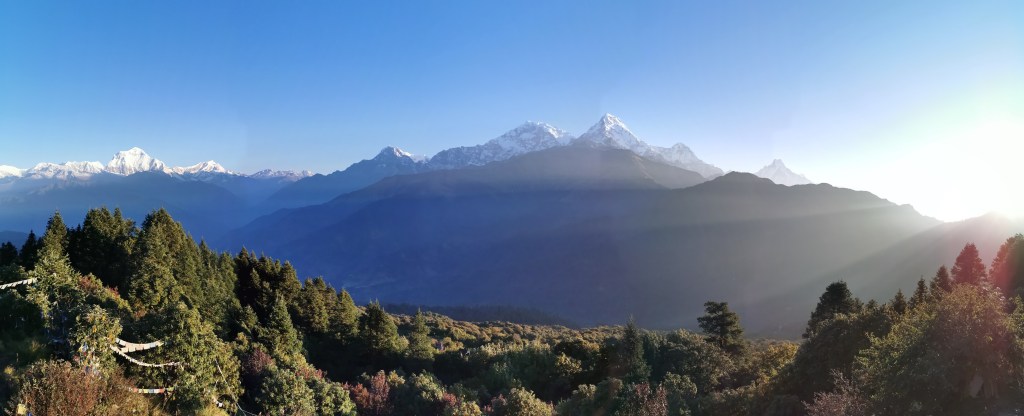
A Childhood in the Shadow of the Fishtail
My earliest years were spent in Pokhara. My father had been deputed to Nepal on a civil infrastructure assignment — the first road connecting Kathmandu to Pokhara, and the development of Pokhara airport. There are photographs from that time, black and white and slightly faded, and in almost every one, if you look at the background, there it is. A distinctive twin-peaked summit, its silhouette rising above the valley with particular elegance — the two peaks tapering like the divided tail of a fish. Machapuchare. The Fishtail. I didn’t know what I was looking at then, but something registers without being named.
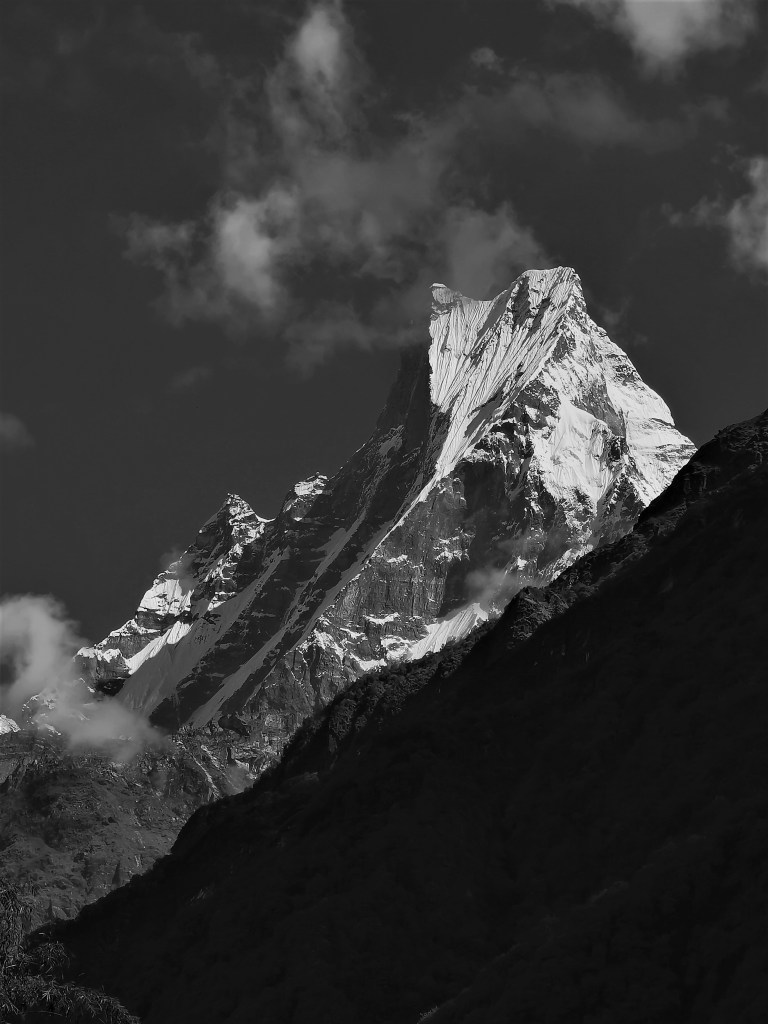
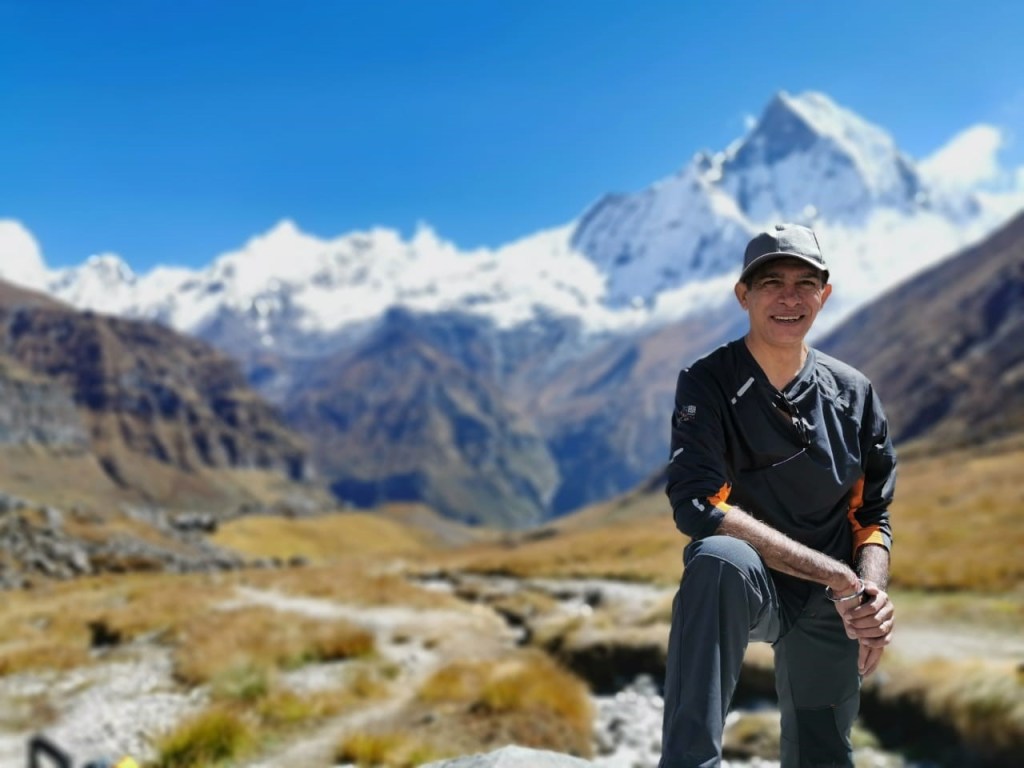
I didn’t fully understand that connection until years later, when I trekked to Machapuchare Base Camp — three days of serious walking to a camp that sits directly beneath the peak, close enough that it fills your entire field of vision. I was up well before sunrise on the first clear morning. The camp was waiting for the famous golden sunrise on the Annapurna massif. I was watching something else. In the hours before dawn, as the moon set behind the western ridge, Machapuchare was bathed in silver — a cold, quiet luminescence that made the mountain look as though it were generating light rather than reflecting it. The most beautiful thing I had seen in the mountains.
Later, around a camp fire with mugs of soup and, eventually, beer, I mentioned to a pair of climbers we’d met on the trail — heading for Annapurna — that Machapuchare seemed conspicuously free of any climbing activity. Everyone passes it. No one goes up it.
That’s when the conversation began.
The Promise That Held
Machapuchare stands at 6,993 metres, sacred to the Gurung people who regard it as the home of Shiva. For most of mountaineering history that belief was respected informally. In 1957 Nepal issued a single permit to a British expedition led by Lieutenant Colonel Jimmy Roberts. Two climbers — Wilfrid Noyce and A.D.M. Cox — pushed toward the summit and reached a point somewhere between fifty and one hundred and fifty metres below the top. They could see it clearly. A final push would have put them there.
They stopped. Before the expedition began, the team had made a commitment to the local Gurung community: they could attempt the mountain, but they would not violate the summit itself. Noyce and Cox honoured that promise, turned around within reach of an unclimbed peak, and descended. It remains one of the most remarkable acts of restraint in mountaineering history — climbers who had invested weeks of effort and risk, standing closer to an unclimbed summit than perhaps anyone ever had, and walked away.
Nepal made the ban permanent. No permit has been issued since. What struck me, sitting by that fire, was not the fact of the prohibition but its character. This is not a mountain that defeated its climbers. It was offered respect, and accepted it.
The Mountain the World Agreed to Leave Alone
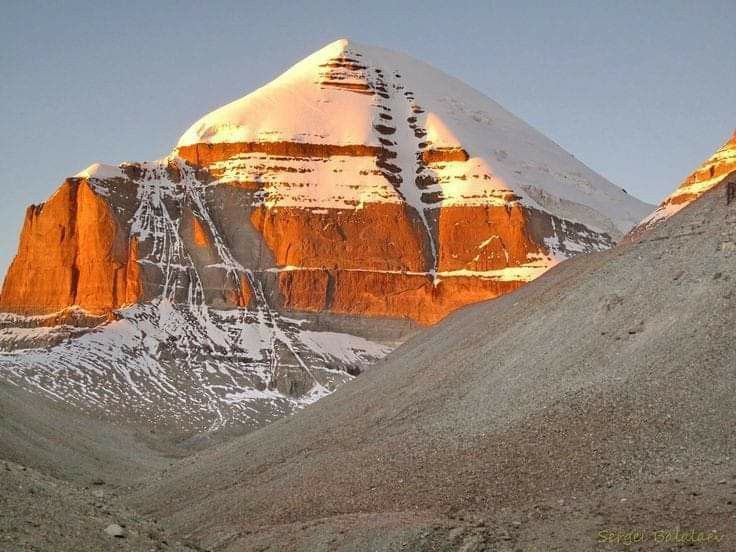
Mount Kailash in western Tibet stands at only 6,638 metres — not tall by Himalayan standards — but is almost certainly the most spiritually significant peak on Earth. Sacred to four separate religions: Hinduism, Buddhism, Jainism, and the ancient Bon tradition of Tibet. In Hinduism it is the home of Shiva in eternal meditation. In Buddhism, the earthly manifestation of Mount Meru, the centre of the universe. Across these traditions, more than a billion people agree that this mountain is not for climbing. Thousands of pilgrims walk the 52-kilometre Kora circuit around its base every year. Nobody attempts the summit.
In the 1980s, Reinhold Messner — the first person to climb all fourteen 8,000-metre peaks — requested permission from the Chinese authorities. He offered to make it symbolic: he would not touch the actual summit, merely approach it. The answer was no, and has remained no ever since. What makes this different from a simple government prohibition is the breadth of the consensus behind it. This is not one policy or one religion. It is a rare moment of collective human agreement across traditions and geographies that some things are better left untouched. In a world that has commercialised almost every frontier, Kailash stands as a genuine exception.
Where Happiness Outranks the Summit
The highest unclimbed mountain on Earth is Gangkhar Puensum — 7,570 metres on the Bhutan-Tibet border. It was attempted four times between 1985 and 1986, each expedition defeated by inaccurate maps, brutal weather, and terrain more difficult than expected. Then in 1994, Bhutan banned all climbing on peaks above 6,000 metres, made permanent in 2003.
The reasoning is characteristically Bhutanese. The country measures national progress not by GDP but by Gross National Happiness — a framework that prioritises cultural preservation, environmental protection, and spiritual wellbeing. In that context, leaving mountains unclimbed is not a sacrifice but a deliberate choice. Bhutan could monetise its peaks, attract the kind of expedition revenue that Everest generates for Nepal. It has simply decided not to. Some things are worth more intact than climbed.
The Frozen Conflict, and the Forgotten Giant
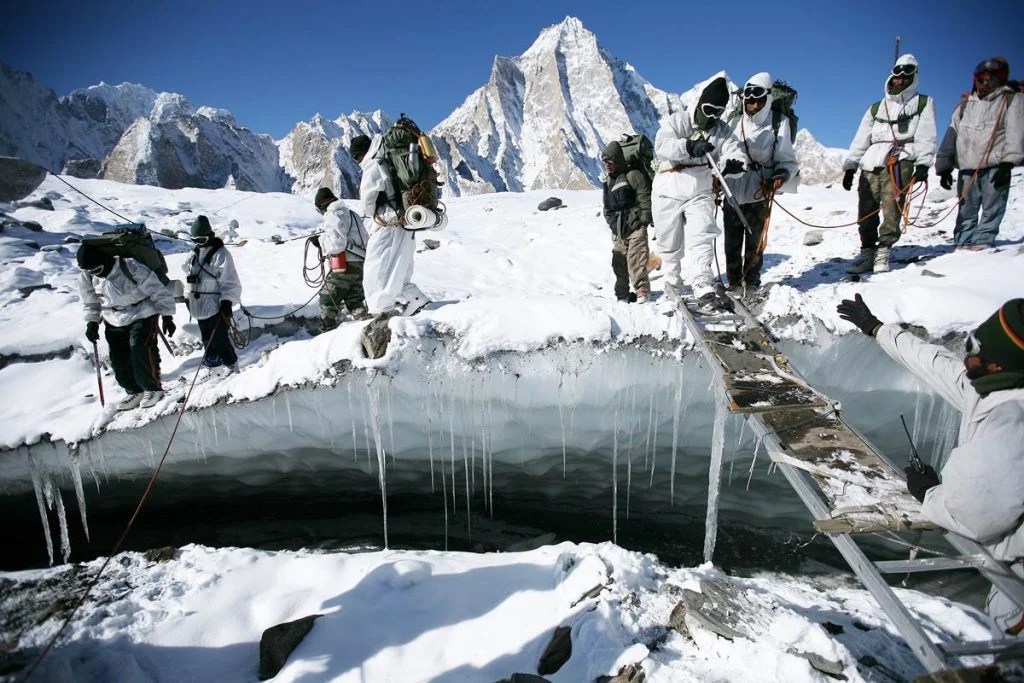
Not every unclimbed summit carries a spiritual explanation. Apsarasas Kangri I — 7,243 metres in the Siachen glacier — sits in what has been an active military zone since India launched Operation Meghdoot in 1984, occupying the glacier ahead of Pakistan. The Siachen is the highest battlefield in the world, soldiers stationed above 6,000 metres in temperatures reaching minus fifty, more dying from cold and altitude than from combat. The mountain is technically climbable. The routes present nothing beyond modern mountaineering capability. But it sits behind military lines in a conflict of over forty years that shows no sign of resolution. Its name, from Hindu and Buddhist mythology, means celestial dancers in the court of the gods — a beautiful designation for a peak locked in such an ugly circumstance.
And then there is Liankang Kangri III — 7,250 metres in central Tibet, taller than Denali, taller than anything in the Alps, and almost entirely unknown. It has not been attempted. It has not been prohibited. It does not appear in mountaineering journals. It exists primarily as a point on satellite maps. Getting to its base camp would require weeks across some of the most isolated terrain on the Tibetan plateau. No roads, no villages, no trails. In the hierarchy of mountaineering, climbers want famous peaks with history and prestige. Liankang Kangri III offers none of that. Snow falls on its slopes. Wind scours its ridges. No human eye sees it. Not forbidden, not sacred — simply forgotten.
What the Fire Taught Me
The conversation at Machapuchare Base Camp went on longer than anyone had planned. The fire reduced itself to embers. The Annapurna climbers went to bed. I stayed a little longer.
What connected these very different mountains was not altitude or technical difficulty. It was that the reasons for their untouched summits were entirely human. A promise made and honoured. A religious consensus held across four traditions and a billion people. A country that chose happiness over revenue. A military conflict that turned a beautiful peak into a classified location. A mountain so obscure it never entered anyone’s plans.
In the morning, the Annapurna massif turned gold exactly as advertised. Cameras were raised. The spectacle delivered everything it had promised. But before all of that, Machapuchare had its silver hour — quiet, unhurried, entirely indifferent to anyone watching.
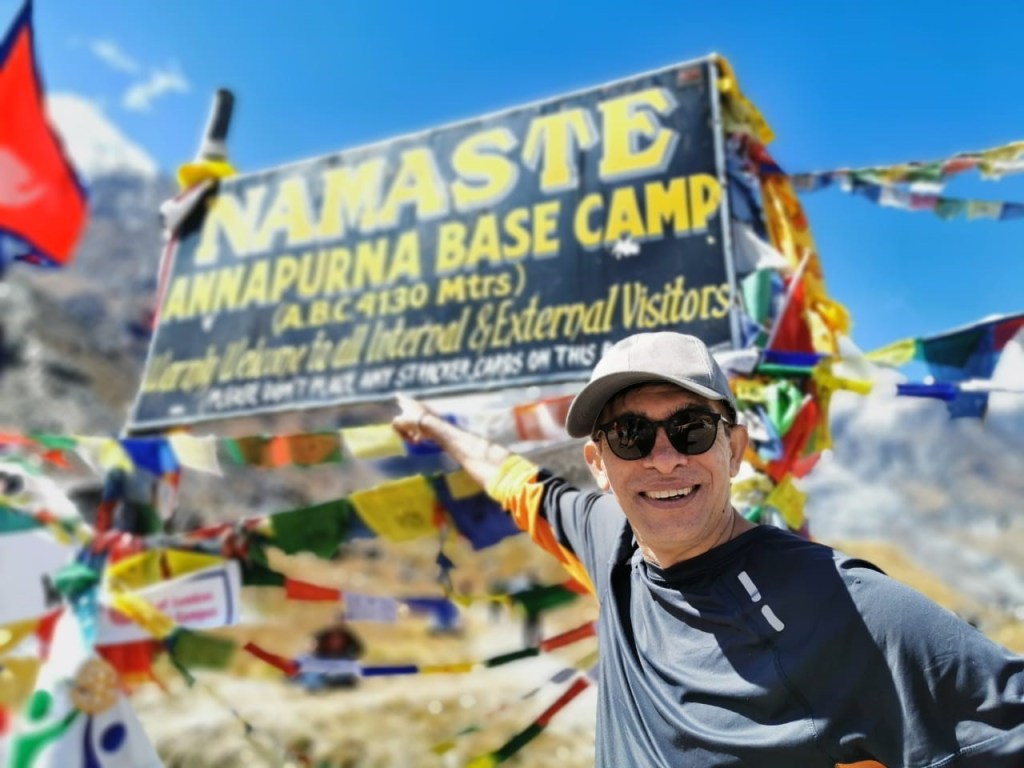
The mountain in my childhood photographs. Still unclimbed. Still there.
Some things are more interesting for what they withhold.
— Machapuchare Base Camp, Annapurna region


Leave a Reply