Festivals in India don’t sneak up quietly. They arrive with drums, firecrackers, and a menu card thicker than a wedding invitation. Forget the seasons of summer, monsoon, and winter—we live by the Season of Food. And that season is here. Time to tighten up the belt, because the calendar is about to deliver more calories than your neighbourhood mithaiwala.
Onam: Banana Leaves and Banana Splits (Not the Ice Cream Kind)
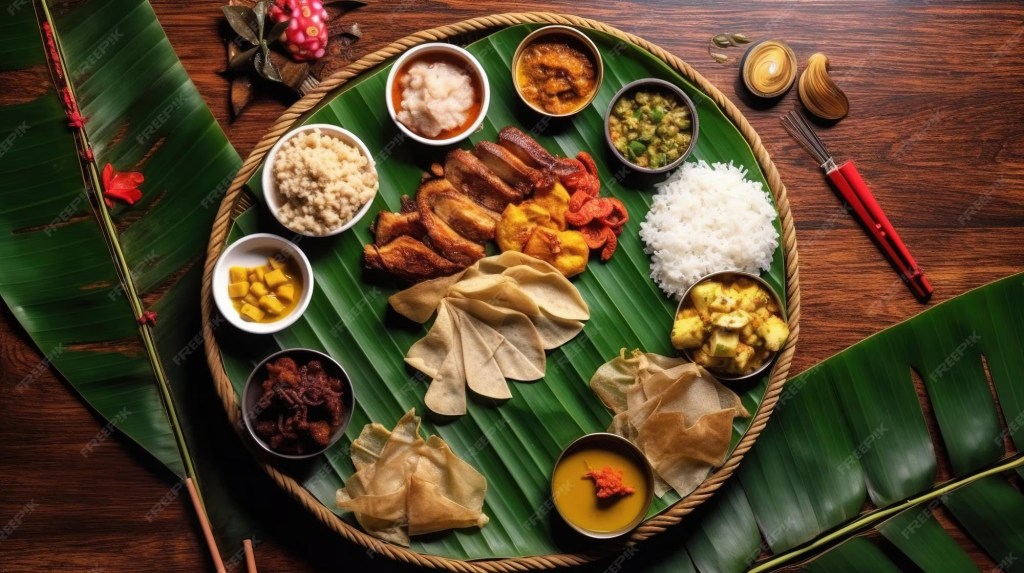
Let’s start with Onam. While Kerala celebrates the homecoming of the legendary King Mahabali, the rest of us are secretly jealous of the Onam Sadya, the grand vegetarian feast served on a banana leaf. Forget about calorie counting—the Sadya comes with at least 20–26 dishes. There’s sambar, rasam, olan, avial, pachadi, and of course, three types of payasam because one isn’t enough when the gods themselves are invited to lunch. The logic is simple: if you’re going to honour a king, feed like a king. Legend has it that Mahabali, who once ruled Kerala, returns each year to see if his people are happy and prosperous. And what better proof of prosperity than serving so much food that your banana leaf starts bending under the weight?
Even the sequence of eating has meaning. For example, the salt pickle is served first to whet the appetite, payasam is served mid-meal (not at the end) to balance the spicy curries, and buttermilk comes last to cool the stomach. Thousands of years before nutritionists discovered “gut health,” our ancestors had already designed the perfect probiotic finish.
Ganesh Puja: Modaks Over Muscles
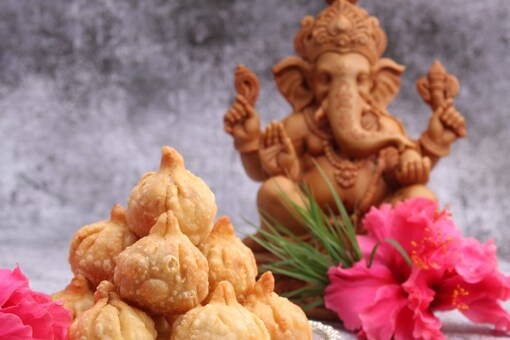
Barely have you digested the Sadya when Ganesh Chaturthi rolls in, led by the elephant-headed god with a sweet tooth. Ganesha’s favourite snack? The legendary modak—sweet dumplings stuffed with coconut and jaggery. They’re steamed (ukadiche modak) or fried (for the impatient), and they’re so irresistible that even the god of wisdom couldn’t stop at one.
One story goes that when Ganesha polished off a mountain of modaks, his belly grew so round that the moon couldn’t resist laughing. Big mistake. An offended Ganesha promptly cursed the moon. But he didn’t stop there.—In a fit of sweet-fuelled fury, he snapped off one of his tusks and hurled it at the moon, leaving it scarred for eternity. And that, legend says, is how the moon got its blemishes—and how Ganesha ended up with his signature “tooth-and-a-half” look, proof that too many modaks can change history. Anyways, by the time immersion day arrives, the only thing heavier than the clay idol is your own stomach.
Shrāddha: Feeding the Ancestors (and Time Travelling Through Food)
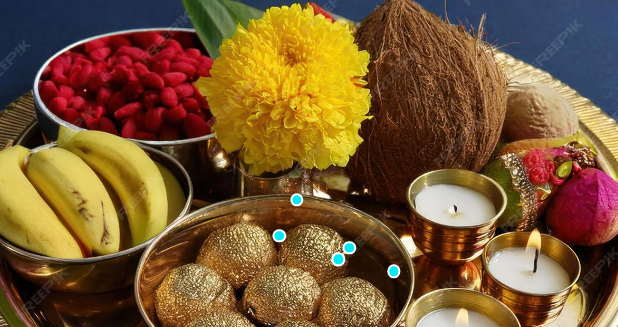
From gods we move to ancestors. The Śrāddha ceremony is a solemn occasion of remembrance, when families prepare food offerings to honour those who came before us. Even here, the bond is expressed through the dining table: feeding others in their memory is seen as a way of ensuring blessings and peace for the departed.
And here’s where it gets fascinating. The menu often reflects what our forefathers actually loved to eat. So, if great-grandfather adored plain rice with ghee and jaggery, that’s exactly what’s served. If grandmother was known for her urad dal pakoras, out they come. And here’s the twist: these dishes give us a glimpse into pre-Mughal, pre-Portuguese, pre-British India food choices and habits of our ancestors—a culinary time machine.
Think about it. No chillies (they arrived with the Portuguese). No tomatoes or potatoes (same story). No corn, no cashews, no cauliflower. Instead, it was all about native millets, lentils, rice, gourds, yams, bananas, sesame seeds, and jaggery. Shrāddha meals are, in a sense, edible archaeology. You’re not just remembering ancestors—you’re tasting what was possible in their kitchens centuries ago.
Of course, there are rules: bananas and coconuts are top-tier offerings, believed to be the purest They’re believed to be the purest of foods because, they aren’t touched or nibbled by birds or animals before reaching your plate. No squirrel is going to steal half a banana off a tree, and no crow is going to peck at your coconut. These foods come sealed and untouched, straight from nature’s packaging department—certified organic, divine-approved. Coconuts even carry symbolic weight—break one, and it’s like cracking your ego open, offering your pure self to the divine. Also handy if you’re hungry after the puja.
Navaratri and Durga Puja: The Goddess and the Gastronomy
And then it’s the dancing fasting and feasting of a different kind during the time of devotion. Navaratri lasts nine days and nights of worshipping the goddess in her various forms, and the food rules are, let’s say, “flexible.” Some families eat only fruits, others allow milk and nuts, and still others turn it into a culinary adventure with sabudana khichdi, singhara halwa, and kuttu rotis / pakoras.
The irony of fasting during Navaratri is that it rarely reduces calories. The so-called vrat snacks are fried, sweetened, and swimming in ghee. You might avoid rice and wheat, but by the ninth day, your sabudana vadas have done more damage to your waistline than Diwali sweets ever could.
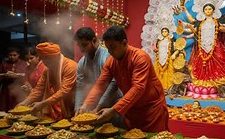
Meanwhile, in Bengal, Durga Puja is a food festival disguised as a religious one. The goddess slays Mahishasura, yes, but the bhog at pandals—khichuri, labra (veg curry), tomato chutney, and payesh—is what people really line up for. Ask any Bengali, and they’ll admit that Pujo is 50% devotion, 50% food, and 100% joy. Durga Puja also doubles as a reunion buffet. You bump into long-lost cousins over plates of khichuri, compare payesh recipes with aunties, and secretly judge which pandal served the best labra. It’s community spirit at its most delicious.
The Eternal Tug-of-War: Stomach vs. Belt
The thread connecting all these festivals is clear: Food in festivals is about symbolism as much as sustenance. Bananas aren’t just fruits; they’re symbols of fertility and prosperity. Rice isn’t just grain; it’s life itself, sown and harvested with devotion. Ghee is purity in edible form, and sweets? Well, sweets symbolise our complete lack of willpower in the face of temptation.
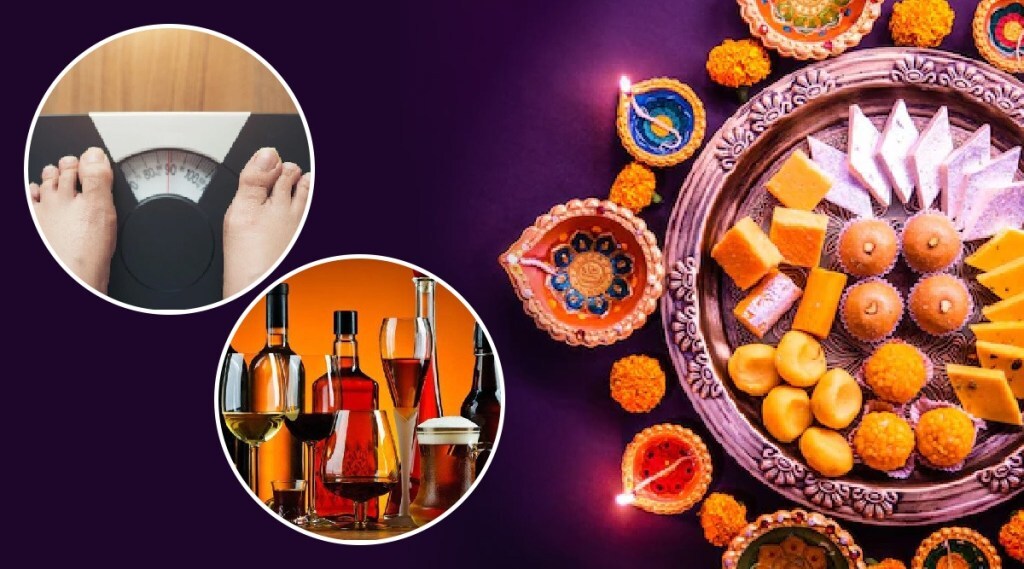
By the time the season wraps up, your ancestors have been fed, your gods have been pleased, your cousins have been overfed, and your weighing scale has gone into hiding. King Mahabali may return each Onam to check on prosperity, but he must surely laugh at how “prosperous” our waistlines are looking.
But maybe that’s the whole point. Festivals remind us to eat with abandon, laugh with family, and accept that love, faith, and food are inseparable. As a dear uncle once said while reaching for his seventh modak during Ganesh Puja: “If Ganesha himself couldn’t stop at one, why should I?”
So go ahead—break that coconut, stir that sambar, fry that sabudana vada. After all, it’s not just the season of food. It’s the season of life, memory, and joy served hot on a banana leaf.
Happy feasting during festivities!
 Poyekhali !
Leave a comment