There is a very particular kind of excitement that arrives in India around mid-January. It isn’t loud like Diwali, or reverential like Navratri. It’s steadier, quieter—and deeply edible. The kind of excitement that creeps in through kitchens rather than calendars.
Across India, mid-January festivals—from Pongal and Bihu to Lohri and Makar Sankranti—fall around the same time because they follow the sun, not the moon, marking a shared seasonal turning point even as each region celebrates it with its own food, rituals, and stories.
I’m writing this now from London, on a cold, wet, windy morning where January feels endless and grey. And perhaps that’s why these festivals feel sharper in memory—because back home, January was never just endured. It was eaten through.
The Shared Moment: When Winter Softens and Granaries Speak
Mid-January marks Uttarayan, when the sun begins its northward journey. Days start to stretch. The sharpest edge of winter dulls. Fields either rest—or reward.
This is agricultural logic before it becomes religious symbolism.
- Harvests are complete or safely stored
- Cold regions crave warmth and fat
- Dry regions rely on hardy grains and seeds
- River-fed regions celebrate abundance
Religion adds structure. Climate and crops decide the menu. Each region answers the same seasonal question in its own accent:
What should we eat now that the sun has turned?
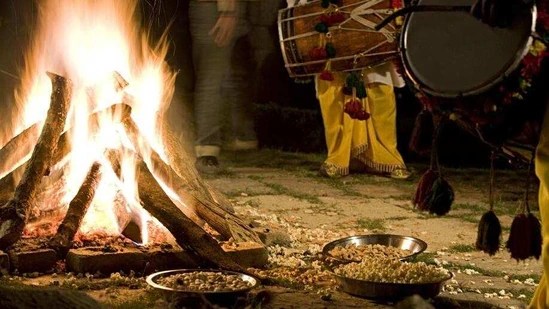
Lohri (Punjab): Bonfires, Butter, and Serious Winter Food
Lohri doesn’t whisper. It crackles.
As a Punjabi, this is the festival I know in my bones. A Lohri bonfire during the coldest spell of the year—foggy, biting Delhi NCR winter—hands stretched desperately towards the fire, while someone keeps feeding you peanuts and rewri at alarming speed. Every food item feels designed for one purpose: survive winter, happily.
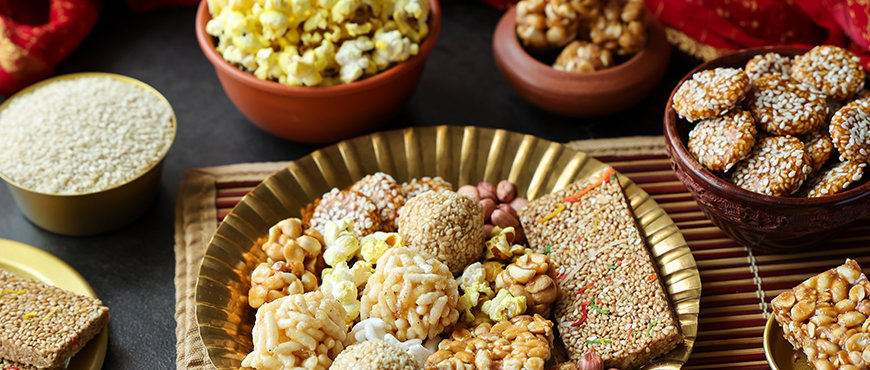
Makki di roti, sarson da saag, gajak, rewri, popcorn—this is food with density and intent. Mustard greens thrive in winter. Maize grows exactly where it should. Sesame and jaggery generate internal heat. And ghee does what ghee has always done best: make everything warmer and better.
Lohri food is communal by nature. Passed around fires. Eaten standing up. No plates, no fuss, no hierarchy. Religion and ritual hover politely in the background. The centre of the celebration is warmth—physical and social.
And if you’re still cold, there’s only one solution: break into bhangra. Nothing raises body temperature faster than trying to keep up with dhol beats around a bonfire while pretending you’re not out of breath.
Behind the fire and food sits folk memory. Lohri songs invoke Dulla Bhatti, the Punjabi Robin Hood, remembered for rescuing girls and arranging their weddings with dignity. “Sundri Mundri Hoi…” isn’t just festive noise—it’s folklore reinforcing social values of protection and generosity.
The fire burns. The food circulates.
Lohri di vadhayiaan.
Makar Sankranti (Gujarat): Jalebi–Fafda Is Not Optional
Gujarat treats Makar Sankranti with enviable clarity.
I learnt this in my days in Ahmedabad, when I stepped out early, hoping for a “light breakfast.” Every farsan shop I passed was frying jalebis in heroic quantities and stacking fafda like construction material. People queued calmly, confidently. No menus. No confusion.
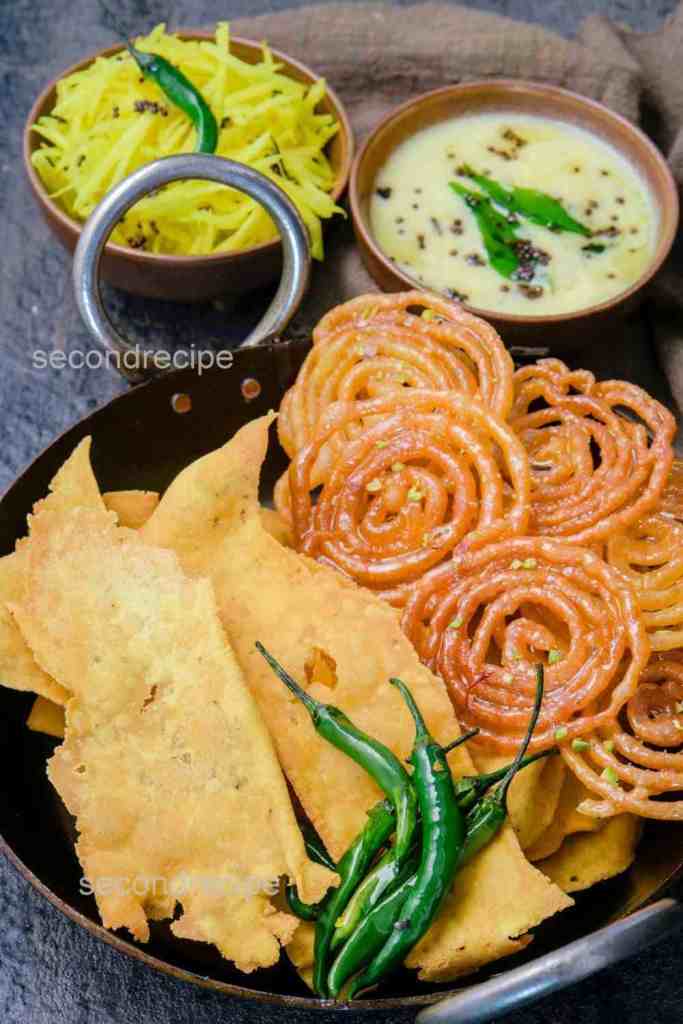
On this day, jalebi–fafda is non-negotiable.
Crisp gram-flour fafda, syrup-soaked jalebi, raw papaya sambharo, fried green chillies—sweet, salty, spicy, oily, crunchy. January mornings are cold. Kite flying burns energy. This breakfast delivers warmth and stamina in one decisive plate.
For one day, an entire state agrees on breakfast—a rare and beautiful thing.
Rajasthan’s Sankranti (Jaipur): Kites by Day, Fireworks by Night
Rajasthan—especially Jaipur—turns Makar Sankranti into a full-day sensory experience.
Daytime belongs to kites, and not the gentle kind. The sky crowds quickly, and you learn to walk carefully—fallen kites and tangled, razor-sharp manjha stretch across streets, capable of cutting or bruising an unsuspecting passer-by. Buying a kite is optional. Walk a few paces and a lost one will land near you. Look closely and you’ll often find an advertisement printed on it: a shop sale, a coaching class, a local offer. Marketing riding on ritual—not a bad business model.
Then comes sunset—and the city switches personality.
Almost like a curfew, kite flying stops. Fireworks take over. Not orderly, not restrained—just thunderous, joyful chaos. Sparkles, flashes, aerial bursts in no particular order. Where kites filled the sky an hour ago, pyrotechnics now rule. It feels like Diwali, Holi, and Independence Day compressed into one evening.
That’s when you sit down. Ideally at badi choupal, sipping masala kulhad chai, biting into a hot pyaz kachori, and finishing with ghewar—that honeycomb-like dessert that seems purpose-built for winter nights. Rich, indulgent, and exactly right.
Pongal (Tamil Nadu): Rice That Refuses to Stay Inside the Pot
Pongal is one of the most literal food festivals in India. It doesn’t hint at abundance—it boils it over.
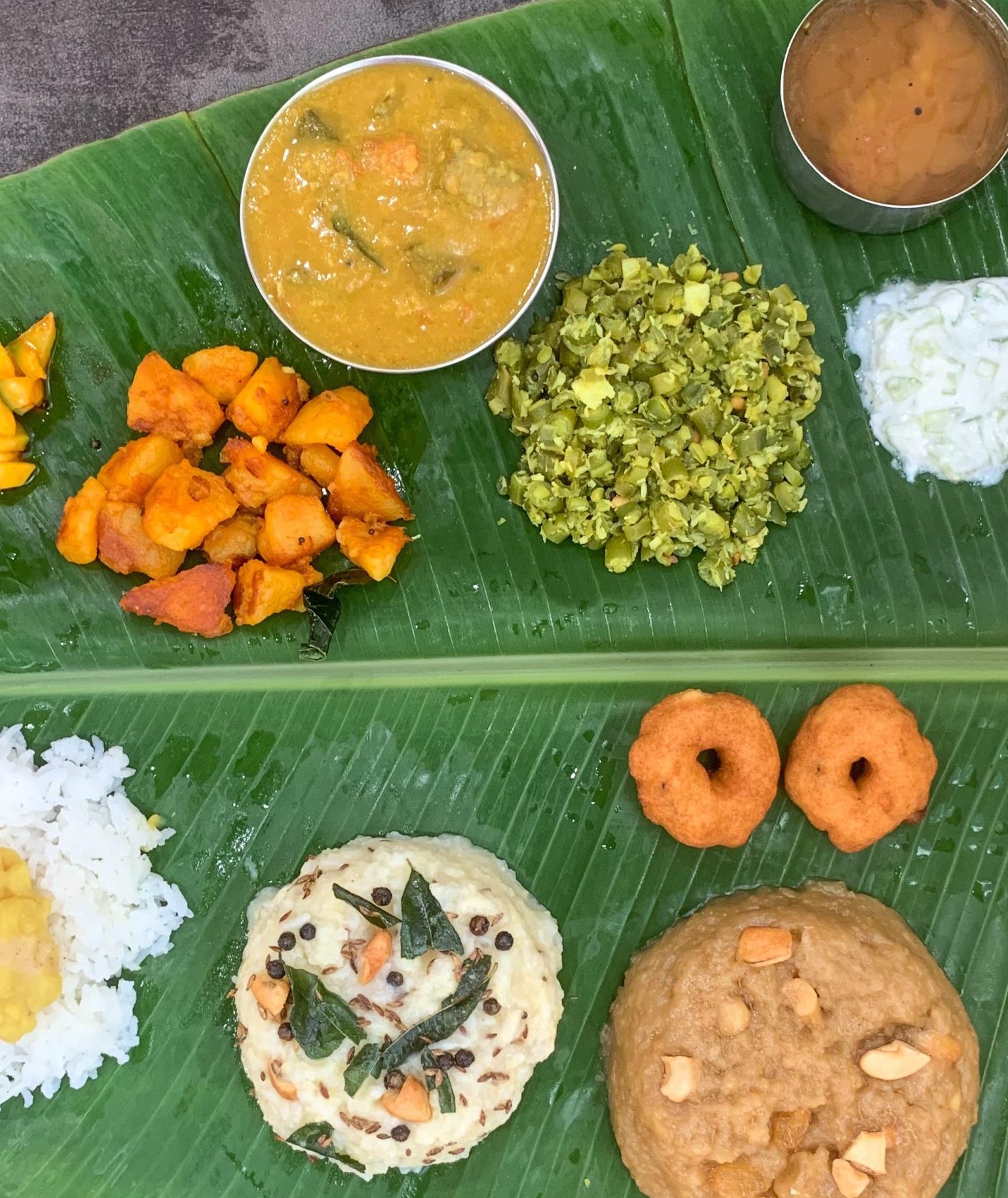
The first time I watched Pongal being cooked, someone corrected me gently: “It must overflow. Otherwise, what are we celebrating?” Freshly harvested rice, milk, jaggery, and ghee cook together until the pot spills, announcing prosperity to anyone nearby.
Climate explains everything. Rice cultivation, cattle, and irrigation cycles dominate Tamil Nadu’s agrarian life. Pongal thanks the sun, the animals, and the earth with food that is nourishing, seasonal, and refreshingly unpretentious.
Poush Parbon (Bengal): Winter, Rice, and Jaggery Alchemy
Bengal’s Poush Parbon turns winter kitchens into sweet-making workshops.
New rice meets date-palm jaggery to become pithe, puli, patishapta—shaped patiently, often collectively. Winter matters here; the cold allows these sweets to set, dry, and hold their form.
Magh (Bhogali) Bihu (Assam): Rice in Every Personality
Assam celebrates harvest with rice doing acrobatics.
During Magh Bihu, rice appears flattened, puffed, roasted, fermented, and sweetened. My Gawhati friends kept handing me different preparations while watching Bihu group dance, explaining—patiently—that no, these are not the same thing.
Climate and geography explain it all. Fertile plains and river systems make rice central to life. When harvest ends, celebration becomes playful rather than heavy. Food is meant for grazing, sharing, and dancing between bites.
Lobia Khichdi (Himachal): A Bowl Full of Winter, Ghee, and Memory
In Himachal, mid-January always tastes a little personal to me.
Every year, without fail, my late mother-in-law would cook lobia khichdi—not because a calendar demanded it, but because this was the time for it. Rice, lobia (black-eyed beans), ghee, and very little else. Simple on paper. Impossible to replicate.
Himachali beans are different. They come in shades of soft white, pale pink, and mottled cream, plumper and juicier than what you find elsewhere. They hold their shape, yet soften gently when cooked slowly in cold kitchens that smell faintly of grain, wood, and ghee.
She always said this khichdi only tastes right at this time of year. Make it in summer and something feels off. Make it anywhere else and it never quite works. Maybe it’s the cold that sharpens appetite. Maybe it’s the beans. Or maybe it’s the generous dollops of ghee and a bucketful of motherly affection quietly finishing the dish.

It was served hot, comforting, unhurried—food meant to carry you through short days and long winter nights. No garnish. No performance. Just nourishment and care.
I’ve eaten lobia khichdi many times since. It never tastes quite like that. Some flavours belong not just to ingredients or seasons, but to the hills, the winter, and the people who cooked for us without ever calling it tradition.
Those are savoury memories. And they return, every January.
Sitting Far Away, Remembering the Heat
From London, January is mostly rain and wind, grey skies and earlier sunsets. There are no bonfires in the street, no kites tangling overhead, no neighbours insisting you eat one more spoonful because “abhi thand hai.”
And yet, writing this, I can almost feel the warmth—of fires, of ghee, of shared plates and unhurried afternoons.
Same sun. Same week. Completely different plates..
 Poyekhali !
Leave a comment