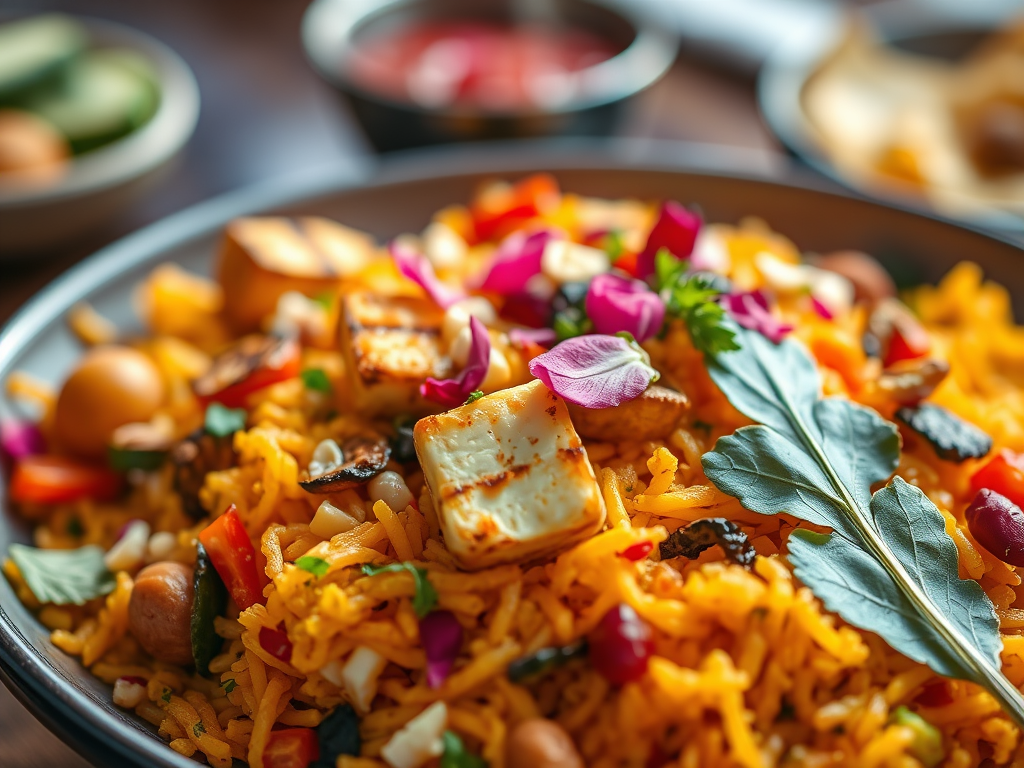
When I got the invitation to speak at the Wimbledon Guild on Culture and Cuisine, I knew exactly what I wanted to dive into—the magical world of spices. It was the perfect chance to not only share my thoughts but also to literally “spice things up” with some live cooking. I decided to take everyone on a spicy odyssey, sprinkling in stories about the rich history of spices while whipping up a Paneer Tikka Biryani. This dish was the perfect blend of Indian cooking techniques and a medley of spices, making it the ideal way to bring my talk—and the flavors—to life!
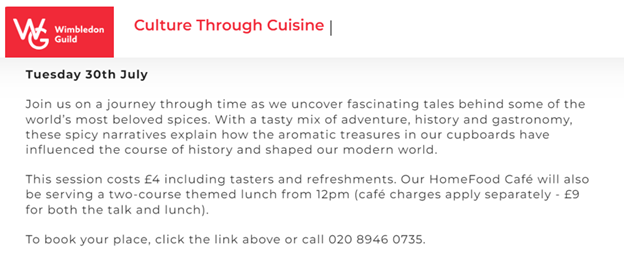
On the hottest day of the year in the UK, over a dozen brave souls turned up for my talk….and because the food was magical and aroma spread through the building (I think!), about 40 people joined in for lunch. I whipped up a Wimbledon-inspired Paneer Tikka Biryani. This eclectic fusion dish combined elements from various regional Indian cuisines. We boiled the rice in fresh veggie stock and fragrant spices (yakhini from Kashmir), then layered it with grilled vegetables (Malabar), barista onion (Nizami Hyderabad), and mint. Another layer of tandoor paneer tikka (Delhi style) and the top layer was adorned with nuts, herbs, berries (Parsi Mumbai), and a dash of rose/kewra essence (awadhi Lucknow). We paired this with minty cucumber raita, poppadoms, mango chutney, and dessert option of Paneer kesar Rasmalai sprinkled with rose petals. Sounds fancy, right? It was delicious, if I may say so myself.
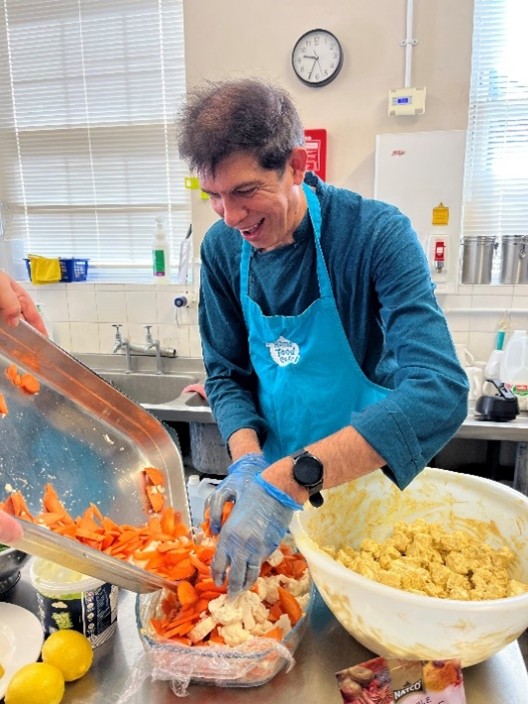
Cooking for 40 people in a professional kitchen with a local chef and a keen assistant turned into an impromptu master class with live narration of whys and hows. I managed to whip up the biryani in under two hours, just in time for a quick gulp of strong karak chai before my talk. The feedback was good. Even though I kept the spice level mild and very fragrant to test the local palate, they actually liked it and finished it.
The talk was great fun and quite interactive (I actually let others chime in for a change!). It was like a history class, but it was engaging and certainly much tastier. Some snippets of the script….
A World Set Ablaze by Flavor
Spices have always been more than just flavor enhancers. They’re tiny packets of history and culture, capable of sparking major events.
Just consider this: Christopher Columbus set out on his famous voyage not to discover new lands, but in search of a new route to the East Indies for spices. Imagine, all the history books could have been different if it weren’t for our love of pepper and cloves! And Columbus wasn’t alone; the spice trade had a global impact, affecting everyone from the indigenous tribes of the Americas to the emperors of China.
Did you know that the Opium Wars, which reshaped modern Chinese history, had a connection to spices (tea)? Or that the tiny Banda Islands in Indonesia, home to nutmeg and cloves, were so valuable that the Dutch and Portuguese and British waged bitter wars over them and led to handover of NewYork to the British in exchange of the Nutmeg rich Island of Run? Even the Atlantic Slave Trade was tied to the quest for these coveted flavors. Spices weren’t just goods; they were power.
Spices as Nature’s Defense Mechanism
Ever wonder why plants even produce spices? It’s not because Mother Nature wanted us to have delicious curries. In fact, spices are part of plants’ defense systems. Much like animals develop claws or venom, plants develop chemicals that can ward off predators—whether they’re herbivores fungi or bacteria. These compounds, while toxic to smaller creatures, give our food that irresistible zing. Long before refrigeration, our ancestors figured out that these spices didn’t just add flavor; they preserved food. By killing bacteria and fungi, spices extended the shelf life of precious food supplies. This was especially crucial in warm climates, where food would spoil quickly. Also just so happens that when it gets very cold, food gets sparse and preservation becomes a necessity; and then there were the perceived medicinal value in absence of modern medicine and antibiotics, spices were the saviors for all disease. This is also why so many Europeans valued spices so much and sailed everywhere in the world looking for trade routes to access these spices.
A Spice Map of the World
The global journey of spices is like a treasure map, leading us through jungles, deserts, and across oceans. Let’s take a closer look at where some of our favorite spices come from and how they’ve traveled across the world.
India and Southeast Asia:
The cradle of some of the most essential spices, this region is where the magic begins. South India is the birthplace of turmeric and black pepper, both of which are staples in kitchens around the world. Sri Lanka, or Ceylon as it was once known, gave us the warm, woody flavor of cinnamon. Further east, ginger and the liquorice plant made their way into countless recipes.
The Spice Islands (Maluku Islands, Indonesia):
Ah, the famous Spice Islands, the original home of nutmeg, cloves, and mace. These tiny islands were once the epicenter of the spice trade, attracting European explorers and leading to fierce colonial battles. Today, these spices are as common as salt, but back then, they were more valuable than gold.
The Mediterranean:
The Mediterranean region is the heaven of herbs and spices. Bay leaves, oregano, fennel, and mint all have roots here. Fennel, interestingly, has a historical twist—its name is linked to the famous Battle of Marathon. Imagine a soldier ran 26 miles to deliver the news of victory, only to collapse from exhaustion! The city of Marathon was named after the fennel fields that once covered the area, the brave and yet tragic distant run became a sport, called ‘marathon racing’ a small reminder of how deeply spices and herbs are embedded in history.
The Americas:
Let’s not forget the contributions from the New World. Vanilla and paprika, two of the most beloved flavors, hail from Mexico. Vanilla is particularly fascinating; archaeologists found traces of vanillin, the compound that gives vanilla its distinct flavor, in ancient tombs in Israel, suggesting trade routes between the Americas and the Old World long before Columbus. And cacao, the plant that gives us chocolate, was so prized by Mesoamerican cultures that its beans were used as currency. Who wouldn’t love to have chocolate money?
The Caribbean and South America:
In the Caribbean, Jamaica gave us allspice, a wonderfully aromatic spice that combines the flavors of cinnamon, nutmeg, and cloves into one. Cayenne pepper, a staple in many spicy dishes, comes from French Guiana.
Spices in the Kitchen: A Culinary Melting Pot
One of the most beautiful things about spices is how they bring the world into our kitchens. Take biryani, for example, India’s national dish. Biryani is a perfect representation of how spices have traveled and transformed. Each region of India has its own version of biryani, from the saffron-scented Awadhi Biryani of Lucknow to the potato-laden Kolkata Biryani. The name “biryani” itself is derived from the Persian word “birinj,” meaning rice, its cooked using a Dum (steam) technique which originated in central asia, the diverse fragrant spices come from SouthEast Asia but it has been invented and perfected very much in India.
In the same spirit of exploring the rich history and stories of spices, and how they’ve shaped cultures across the world, today’s Paneer Tikka Biryani brings together a symphony of diverse Indian cooking techniques and fragrant spices. This dish is a celebration of the many flavors and traditions that make up the culinary tapestry of India, all beautifully woven together in one pot.
The Spice Race: From Earth to Fiction
As we wrap up our spice journey, it’s only fitting to acknowledge how spices have even influenced our imagination. The most famous fictional spice, “melange,” from Frank Herbert’s Dune series, only grows on the desert planet of Arrakis. While this may be a work of fiction, it’s inspired by the real-world spice trade that shaped human history. Even in the far reaches of space, the allure of spice continues to captivate us.
The Spice Trail Continues
Spices are not just ingredients; they’re storytellers. They’ve woven their way through our history, influenced our societies, and continue to shape our culinary traditions. As you explore the world of spices in your kitchen, remember that you’re part of a global tapestry, one that has been woven over thousands of years. Whether it’s the warming flavor of cinnamon or the fiery kick of cayenne, every spice tells a story, and now, you know a few more of them.
So, what’s your favorite spice, and what story does it tell?
 Poyekhali !
Leave a comment