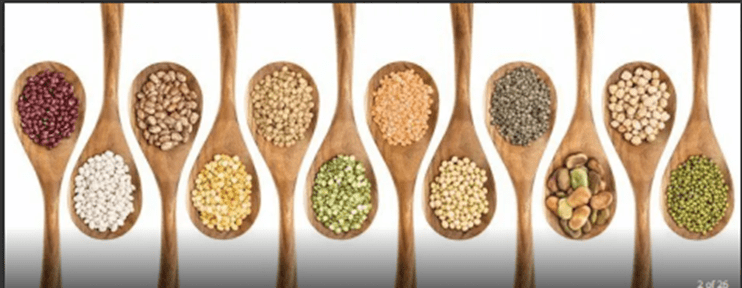
Dal (lentils, pulses or legumes) reigns supreme as the quintessential staple food across India, embodying the essence of comfort cuisine. In a land where daily access to animal protein remains a luxury for many, or a religious avoidance for many others, the enduring marriage of grains and pulses has sustained generations. It truly is the ‘pulse’ of the nation’s food. From cherished classics like Makhani Dal and Rajma Chawal to indulgent delights such as Puri Chole and Chole Bhature, and from hearty favorites like Pongal and Khichdi to humble staples like Roti Dal or Dal Bhat —these dishes create a rich tapestry of tradition and flavor that nurtures both body and soul.
But dal’s significance transcends mere sustenance; it’s a scientific marvel and an environmental ally. As universal heroes, lentils, pulses, and legumes enrich the very soil they grow in, serving as natural fertilizers that replenish vital nutrients and foster crop vitality. With their high nutritional value, especially prized by non-vegetarians for their protein content, and their extended shelf life, these humble legumes have become indispensable in meeting the dietary needs of burgeoning populations worldwide. Their versatility in cooking methods and transportability has led to a kaleidoscope of culinary styles and innovations.
Yet, dal is more than just a culinary commodity—it’s a cultural cornerstone, a reflection of India’s values, and a fixture in daily life. This is evident in the rich tapestry of idioms and proverbs that celebrate dal’s significance in Indian society. Expressions like “Dal main kuch kala hai,”(something fishy or suspicious) “Dal roti khao prabhu ke gun gayo,” (be content with simple food and thank god) “Dal nahi galegi,”(the deal would not complete – like lentil would not be tender) and “Ghar ki murgi dal baraabar”(pricy chicken considered equal to homely lentils – about being undervalued/ under appreciated) and many more are part of everyday conversation.
Through this blog, we explore its entrenched place in Indian culture through the lens of one idiom based captivating tale of this humble yet mighty grain – ‘Masoor ki Dal’.
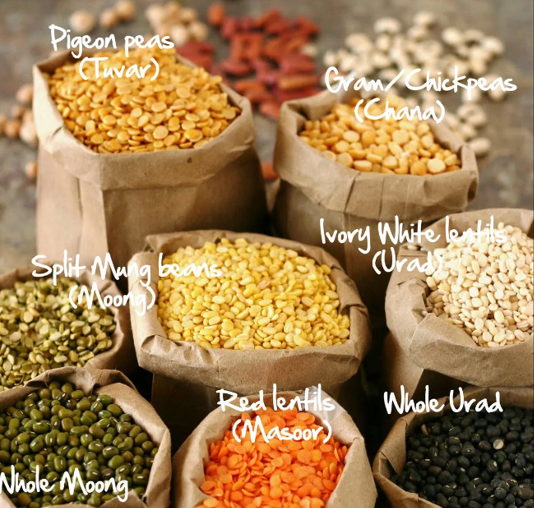
In the days when Nawaabi (Chieftains from central eastern India became really wealthy and autonomous as mogul empire declined and were called nawabs) grandeur reigned supreme, there lived a cook whose culinary creations were extravagant. But as the Nawaabi era dwindled (as East India company from Britain colonised the entire Indian continent), so did his prospects. In search of a fresh start, he packed his pots and pans and set off for the bustling streets of Mumbai.
Now, this cook wasn’t just any run-of-the-mill chef; he was a dal maestro, and soon enough his skills would be put to the test amongst mortal souls.
Upon securing a position in a wealthy household, he was tasked with preparing his signature dish: masoor ki dal. “No problem,” he assured his new employer, though his mind was already whirring with thoughts of the special ingredients required to elevate the dish to its rightful glory.
When presented with the shopping bill with a very very long list of ingredients, the employer’s eyebrows shot up. The Three paisa for the masoor dal itself seemed reasonable, but the total bill for the accompanying ingredients left him reeling—36 rupees!
Indignant, he protested, “This is madness! Three paisa for the dal and 36 rupees for the rest? Preposterous!” But the cook, with a twinkle in his eye, knew better.
With a sigh, he uttered those immortal words, “Ye muhn aur masoor ki dal,” meaning, “Your face isn’t worthy of this dal.” meaning, “You don’t deserve this special treat.” And thus, an idiom was born, reminding us that some things are truly priceless, while others… well, you need the mettle to deserve somethings in life.
So, dear friends, the next time you scoop up a spoonful of masoor ki dal, remember the legend behind its humble origins. And perhaps, take a moment to appreciate the wisdom it imparts: nothing comes easy, we need to put in the effort and have the courage to deserve some things in life.
While many exquisite Nawaabi cuisines have faded into the mists of culinary history, this one does taste and sound a little f(ab)lishi!….Masoor dal generally is considered a humble dish that is universally accepted as the easiest and commonest dal to cook and serve across India. Masoor dal is known for its simplicity rather than its rarity or royalty.
But wait, there’s more to this lentil legend than meets the eye! As I delved deeper into the world of masoor dal, I stumbled upon unexpected twist of an original story from the annals of Middle Eastern history and also from the medieval France.
Legend has it that the Empress of French Emperor Charles, was very fond of red lentils. In her honor, the red lentil gained the regal moniker of “Malka Masoor,” translating to “Empress (Malika) Lentils,” a fitting tribute to the taste beloved by royalty. It is quite plausible that in early days Dal may not be available to the masses before the genetic engineering and scientific advancement were able to design resistant crops with industrial production for the masses. Confirming that this may well be a rarity or delicacy in early times.
Now, let’s delve further into the discovery of another intriguing anecdote from the realms of Sufi lore and the Middle East, shedding light on Masoor as an individual rather than just the dal.
It seems to relate to a saint named Mansoor Al-Hallaj, a preacher extraordinaire whose tale of courage and determination is remembered in the Sufi world. Despite facing imprisonment and torture by the governing authorities, Mansoor remained steadfast in his beliefs, earning him the title of a courageous soul whose resolve echoed through the ages. As he had travelled widely in Asia, his extreme courage was remembered by his followers. His final stand, as gruesome as it was, left a legacy of bravery that’s still celebrated today. So, whenever someone doubted another person’s mettle, they are asked “Yeh muhn aur Masoor ki Daar eh?” with reference to Mansoor’s unwavering spirit and determination.
“yeh munh aur Mansoor ki daar”. Meaning do you have the guts and courage like Mansoor.
Ah, the tales hidden within a simple bowl of lentils never cease to amaze!
 Poyekhali !
Leave a comment